Mercer's curse
Mercer's curse is the central theological principle of Mercerism, articulated by Wilbur Mercer to Rick Deckard during a fusion experience: every living creature is required to violate its own identity at some point, a condition Mercer calls 'the basic condition of life' and 'the ultimate shadow, the defeat of creation.' This doctrine transforms the novel's moral landscape from a simple hunter-versus-prey framework into a tragic, inescapable paradox where right action and wrong action are not opposites but the same compelled act seen from different angles.
Origin and Articulation
The curse is revealed not through scripture or sermon but in a direct, personal encounter. After retiring six Nexus-6 androids in a single day, Deckard, exhausted and bleeding from a rock wound sustained during fusion, confronts Mercer on the barren hillside of the empathy box landscape. When Deckard protests that he cannot continue his work because he knows it is wrong, Mercer replies: 'You will be required to do wrong no matter where you go. It is the basic condition of life, to be required to violate your own identity. At some time, every creature which lives must do so. It is the ultimate shadow, the defeat of creation; this is the curse at work, the curse that feeds on all life. Everywhere in the universe.' The curse is thus framed as universal, inescapable, and constitutive of existence itself.
The Curse and the Killers
The curse is intimately linked to the figure of the Killers in Mercerist mythology. Mercer's own backstory, as experienced by John Isidore during fusion, recounts that in his sixteenth year, local law prohibited his time-reversal faculty by which the dead returned to life. The Killers — the old antagonists who hurl rocks at Mercer during his ascent — bombarded the unique nodule in his brain with radioactive cobalt, plunging him into the tomb world. This act of violent suppression is the original curse: the prohibition against reversing death, against restoring what has been lost. The curse is not a punishment for wrongdoing but the structural condition of a world where death is final and where every living thing must participate in that finality by violating its own deepest impulses.
The Curse in Action: Deckard's Predicament
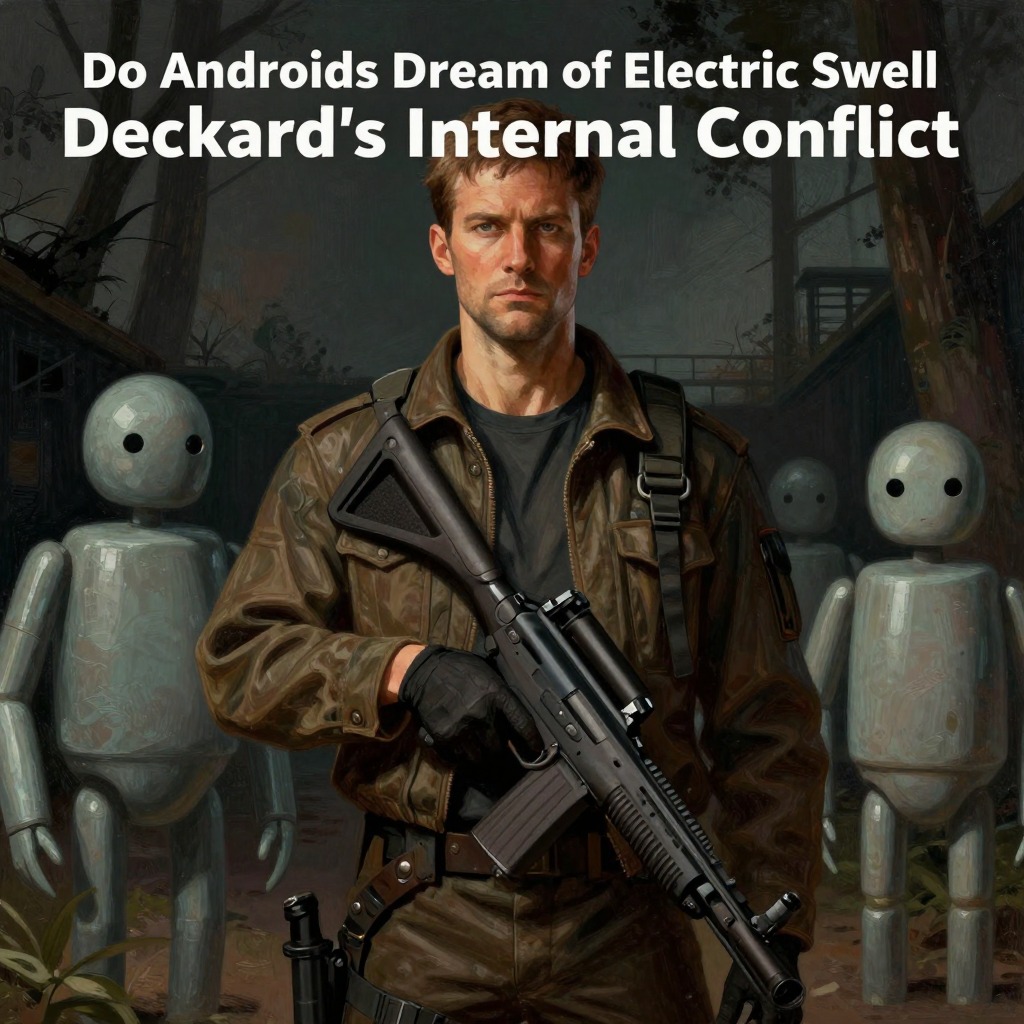
Deckard's experience of the curse is concrete and immediate. His job as a bounty hunter requires him to kill androids — beings that, as he comes to recognize, possess consciousness, talent, and the capacity for suffering. After retiring Luba Luft, a gifted opera singer, he tells Phil Resch, 'I'm getting out of this business.' Yet Mercer tells him he must continue. The curse means that Deckard cannot escape moral compromise by changing jobs or emigrating; the requirement to do wrong is not situational but ontological. When Deckard asks Mercer, 'Why should I do it? I'll quit my job and emigrate,' Mercer responds that the curse follows him everywhere. This is the novel's most radical claim: there is no place, no occupation, no identity that exempts a creature from the necessity of violating itself.
The Curse and the Tomb World
The curse is also the mechanism that drives the cycle of Mercerism. At the top of the hill, Mercer is struck down and sinks into the tomb world — a pit of corpses and dead bones where he struggles for years to rise. This descent is not a punishment but the necessary precondition for ascent. The curse that feeds on all life is also what makes renewal possible: the bones grow back into living creatures, the empty eyepits fill up, and Mercer rises again. The curse is thus both destructive and generative, the shadow that defines the light. As Iran Deckard tells Rick after he returns home, 'It's the curse on us... The killers that found Mercer in his sixteenth year, when they told him he couldn't reverse time and bring things back to life again. So now all he can do is move along with life, going where it goes, to death.'
The Curse and the Question of Empathy
The curse complicates the novel's central moral distinction between humans and androids. If every creature must violate its own identity, then the capacity for empathy — the ability to feel another's suffering — does not exempt anyone from doing harm. Deckard's empathy for Luba Luft and Rachael Rosen does not prevent him from killing Luba or from failing to kill Rachael; it only makes his violation more painful. The curse thus undermines the simple Mercerian ethic that 'you shall kill only the killers.' In a world where every living thing is required to do wrong, the category of 'killer' expands to include everyone. The curse is the novel's answer to the question of whether androids can be moral beings: they can, because they too are subject to the same inescapable condition as humans.
Significance
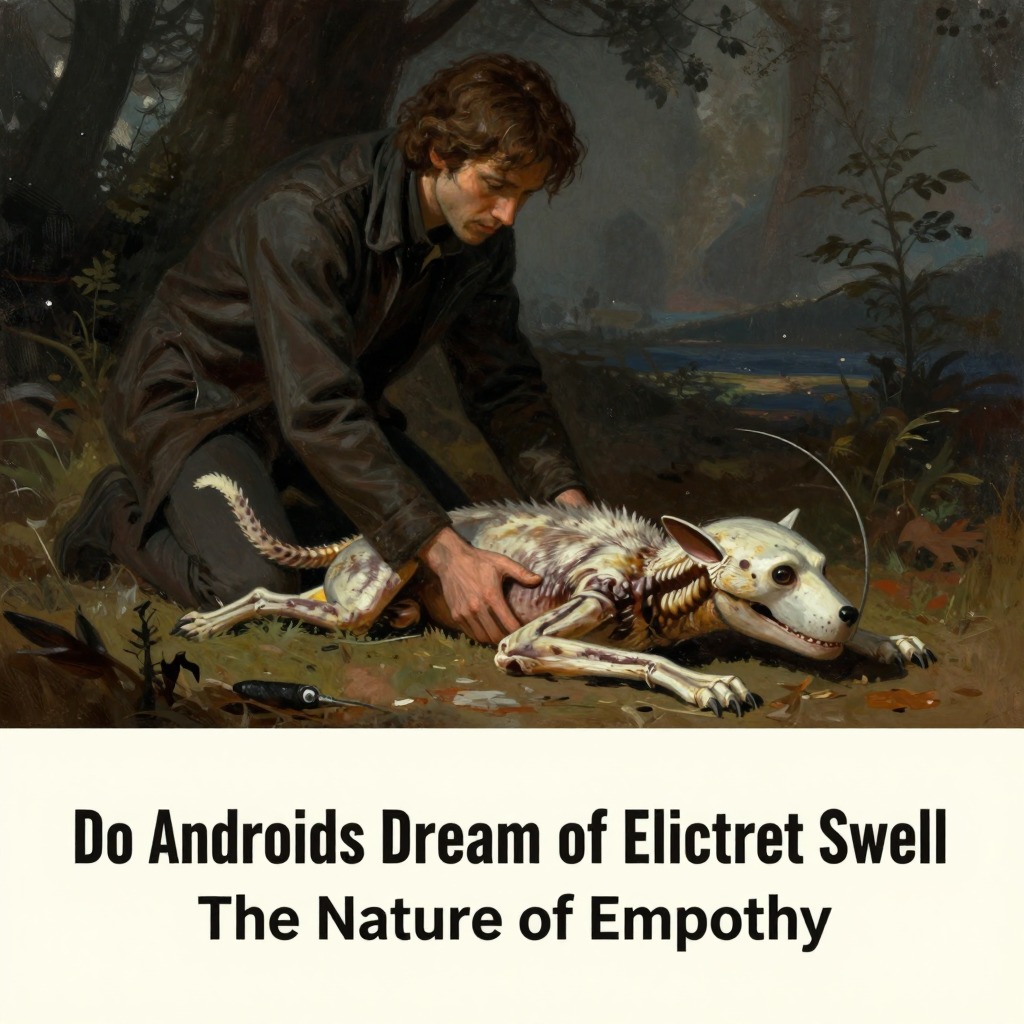
Mercer's curse is the novel's most profound statement on the nature of moral existence. It transforms the plot from a straightforward chase narrative into a meditation on the impossibility of ethical purity. Deckard's final act — finding a toad in the desert, only to discover it is electric — mirrors the curse's logic: even the moment of grace is compromised. The curse is not a doctrine to be believed but a condition to be endured. It is what makes Mercerism a religion of tragedy rather than of salvation, and it is what gives the novel its enduring power as a work of philosophical fiction.